It's Sunday October 18, 2026 Dock Quote: “Without reflection, we...


Online Info About Atlantic Tropical Storms |
|||
| • Current Atlantic Tropical Systems |
• Atlantic Tropical Storm Outlook |
• Atlantic Tropical Weather Discussion |
|
|
|
Atlantic Tropical Weather Discussion
NWS National Hurricane Center Miami FL
8:15AM EDT (1215 UTC) Sun Oct 18 2026
Tropical Weather Discussion for North America, Central America, Gulf of America (Gulf of Mexico), Caribbean Sea, northern sections of South America, and Atlantic Ocean to the African coast from the Equator to 31N. The following information is based on satellite imagery, weather observations, radar and meteorological analysis.
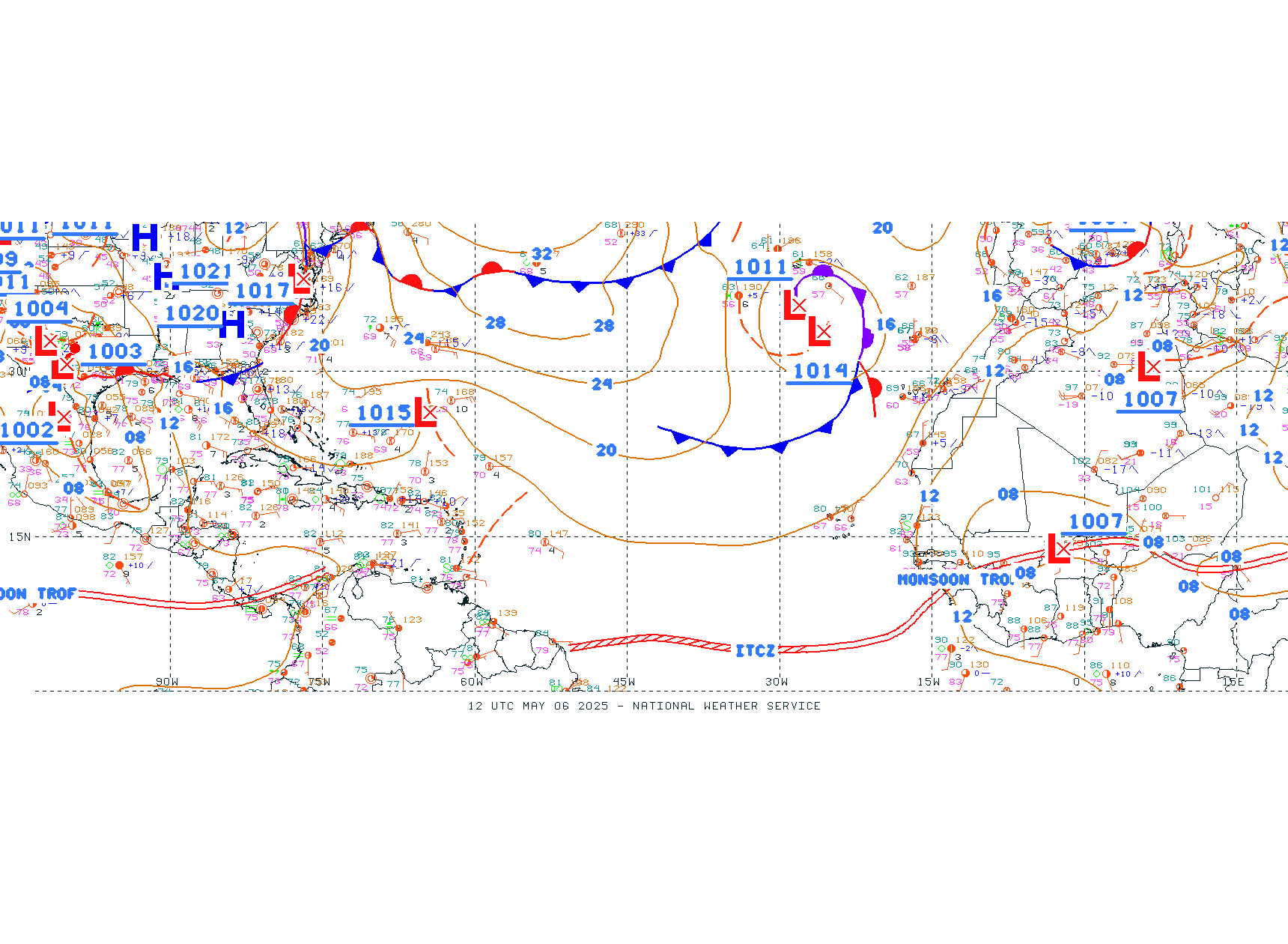
Based on 0600 UTC surface analysis and satellite imagery through 1040 UTC.
Active and Developing Storms
Gulf of America Gale Warning: A cold front extends from Marco Island, Florida to 21N91W where it transitions into a stationary front that extends to the central Bay of Campeche. Strong to gale- force winds and very rough seas to 25 ft follow the front over the SW Gulf offshore Veracruz. Fresh to strong NE winds with frequent gusts to gale force winds behind the front over the NE Gulf will continue through today. The front will slow down as it reaches from the Florida Straits to Merida, Mexico later today, then drift to the southeast of the Gulf through Tuesday as it weakens. Gale-force winds off Veracruz will persist over the SW Gulf through tonight. Peak seas may exceed 25 ft in the Bay of Campeche today, with rough seas prevailing across large portions of the basin through Tue.
Atlantic Gale Warning: This same cold front continues to move SE across the western Atlantic waters, and extends from 31N73W to near Deerfield Beach, Florida. North winds of 25 to 30 kt are behind the front, with frequent gusts over gale-force N of 28N and west of 75W, where a Gale Warning is in effect. Seas behind the front have built quickly to 18 ft. The front will reach from 31N72W to the Straits of Florida later this morning, and from near 31N70W to western Cuba by early Monday morning, then stall and dissipate through mid week. Gale-force gusts are expected to continue across the northwestern zones through today. Seas behind the front are expected to build to 18 ft in N to NE swell today, and higher in the Gulfstream.
Please read the latest High Seas Forecast issued by the National Hurricane Center under AWIPS/WMO headers FZNT02 KNHC/HSFAT2 or at website https://www.nhc.noaa.gov/text/MIAHSFAT2.shtml for further details.
Monsoon Trough And Intertropical Convergence Zone - ITCZ
(The ITCZ is also known by sailors as the doldrums)
The monsoon trough extends from the African coast near 09N13W to 07N15W. The ITCZ begins near 05N19W to 06N40W to 07N59W. Scattered moderate convection is occurring from 03N to 07N and E of 19W. Scattered to locally numerous moderate convection is noted from 07N to 15N between 41W and 57W.
...Discussion: Gulf Of America (Gulf Of Mexico)
See Active and Developing Storms section above for information on the Gale Warnings in effect for portions of the Gulf of America behind a cold front.
A cold front extends from Marco Island, Florida to 21N91W where it transitions into a stationary front that extends to the central Bay of Campeche. Strong to gale-force winds and very rough seas follow the front over the SW Gulf offshore Veracruz while fresh to strong NE winds with frequent gusts to gale force winds are behind the front over the NE Gulf. Aside from the winds and seas, scattered showers and tstms are ahead of the front over the SE Gulf, the Straits of Florida and the Bay of Campeche.
For the forecast, fresh to strong NE winds with frequent gusts to gale force winds behind the front over the NE Gulf will continue through today. The front will slow down as it reaches from the Florida Straits to Merida, Mexico later today, then drift to the southeast of the Gulf through Tuesday as it weakens. Gale-force winds off Veracruz will persist over the SW Gulf through tonight. Fresh to strong NE winds and rough seas will persist elsewhere north of the front and E of 90W into Tue. Looking ahead, strong high pressure building over the lower Mississippi Valley behind the front, will prolong fresh NE to E winds over the eastern half of the Gulf into mid-week.
...Discussion: Caribbean Sea
Scattered showers and tstms prevail over the NW Caribbean being supported by a middle level inverted trough while heavier showers are ongoing over the SW basin supported by the eastern extension of the E Pacific monsoon. The passage of a cold front N of the area is supporing a rather weak gradient over the region, which is maintaining moderate or weaker winds, and slight to moderate seas, except for fresh trades in the south-central Caribbean.
For the forecast, a weaker pressure gradient across the region due to the passage of a cold front across the Bahamas and the southern Gulf of America will maintain moderate to fresh trades in the south-central Caribbean through Thursday and moderate or weaker winds elsewhere. The cold front will likely reach western Cuba and the Yucatan Channel Monday night into Tuesday where it will stall before dissipating. Moderate to fresh NE winds and moderate to rough seas will likely impact the Yucatan Channel and NW Cuba adjacent waters through early Wednesday morning.
...Discussion: Atlantic Ocean
See Active and Developing Storms section above for information on a Gale Warning for waters offshore NE Florida.
A strong cold front extends from 31N73W to near Deerfield Beach, Florida. North winds of 25 to 30 kt are behind the front, with frequent gusts over gale-force N of 28N and west of 75W, where a Gale Warning is in effect. Seas behind the front have built quickly to 18 ft. Scattered showers and tstms are ahead of the front, affecting the Bahamas and offshores N of 22N W of 65W. Strong high pressure located NW of the Azores extends a broad ridge southwestward to 65W, but drapes across a series of surface troughs from 22N and 29W between 40W and 60W. The pressure gradient N of these troughs is yielding moderate to fresh easterly winds with seas of 6 to 8 ft in N swell between 37W and 44W. Moderate to fresh NE to E winds are also between NW Africa and 30W N of the Cape Verde Islands. Moderate or weaker winds and slight to moderate seas are elsewhere.
For the forecast west of 55W, the cold front will reach from 31N72W to the Straits of Florida later this morning, and from near 31N70W to western Cuba by early Monday morning where it will stall before dissipating into midweek. Strong to near-gale force winds and rough to very rough seas will follow the front affecting mainly the waters west of 65W through Tue, although seas will linger through much of the week. Frequent gusts to gale-force winds are forecast behind the front north of 29N and west of 77W today through early Monday morning.
Forecaster: Nelsie Ramos, National Hurricane Center