
It's Tuesday September 22, 2026
SMALL CRAFT ADVISORY IN EFFECT FROM 4 AM EDT WEDNESDAY THROUGH FRIDAY AFTERNOON
March 9, 2010
1 2 next page ›
For a while, no one spoke on the ride from New Bern Saturday morning. It was somber. Quiet. Ken Brandon’s wife of 47 years, Betty, had just passed away on en route to the hospital, and their friend, Ross Otterbacher, was driving Ken home to Oriental.They crossed from Craven in to Pamlico County and a few moments later, Ross pointed out the marker noting the first Pamlico County town on Highway 55. “‘Ken,” Ross said, “There’s the Olympia sign.’”
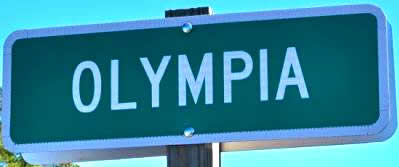
And with that, both men broke out laughing. That a smile and a laugh could come so shortly after her death, was testimony to Betty Brandon and in particular to one of her legacies: the Hiway 55 Acronym.
Ross Otterbacher remembers being seated next to Betty at his first Thanksgiving dinner here. Betty was then in her mid-80s, her grey hair sporting its page-boy cut. Her sweet demeanor gave the retired military helicopter pilot no clue as to what he was about to hear: Betty’s sure-fire method for remembering the order of the towns between the Craven county line and Oriental.
What Betty would tell newcomers such as Ross was that you took the first letter of those Highway 55 towns. You start with Olympia, she’s say, in a voice that ranged from gravel to a fine-china pinggg. “Then Reelsboro. And Grantsboro. And Alliance.”
At about this point she would pause, scanning the listener’s face closely. Noting that for this mnemonic to work, you had to skip over Bayboro, she would continue, “Then Stonewall. And Merritt.”
And then Betty Brandon would wait for it to sink in, before letting a throaty, twinkly laugh escape.
When news spread Saturday that Betty Brandon had died, her acronym for the Highway 55 towns was one of the first things friends brought up.
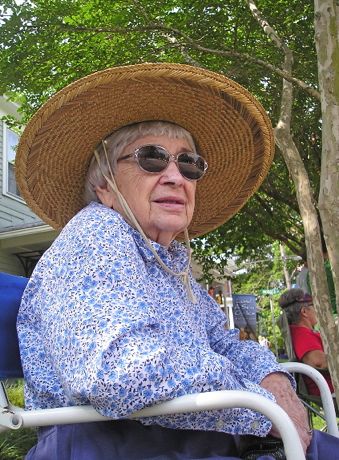
Betty Brandon at a recent Croakerfest Parade. Laura Turgeon PhotoBetty On PatrolThose who may not have known Betty personally may remember her for her slow drives up and down the streets of Oriental. In this way, her head barely higher than the wheel of the tan Taurus station wagon, she kept tabs on what was going on in the village. Friends called this activity, “Betty on patrol.” Many afternoons, especially in warmer weather, she would wind up at The Bean, taking a a decaf-iced coffee and a place on the porch from where she kept up with the goings on in the town she’d lived in since 1994.
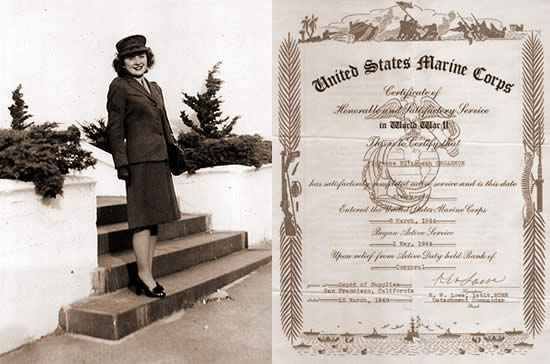
Few may have realized that the diminutive lady in her 80’s had first come to North Carolina more than a half century earlier to be a Marine. In 1944, Camp Lejeune was her destination. Betty Brandon was among the first small wave of women to serve in the US Marine Corps.
From Pennsylvania To The Marine CorpsBetty was born Florence Elizabeth Croasmun on July 12, 1921 in Kane, Pennsylvania. Flo-Betty, as she was called then, grew up in Redclyff, a town so small, she attended primary school in a one-room schoolhouse. After high school, she worked as a clerk. When she was 22, her clerk job was in a Pennsylvania ordnance plant that made TNT.
Betty said that she enlisted in the Marines because for one, she had a brother who was “fighting his way across Germany.” Secondly, she said, “I was really mad about the Bataan Death March,” in which thousands of Americans and Philippine soldiers died. “I had a school friend who was lost in it,” Betty said, adding that three of the 21 students in her high school graduating class died in WWII.
But there was another reason she signed up for the Marines. Speaking with characteristic candor, Betty said, “I was stuck in a job and couldn’t quit and get a better one.” She wanted to get away from the office at the TNT plant but said quitting wasn’t an option because of ‘national policy’ at the time.
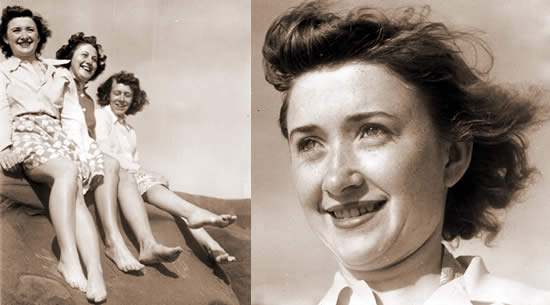
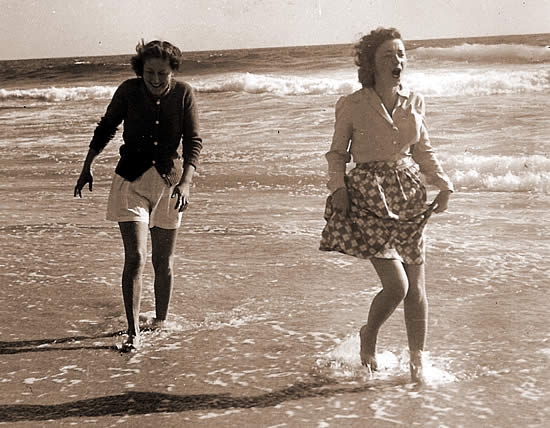
Corporal BettySo, in March of 1944, at 5-foot-1, Betty Croasmun enlisted in the Marines and in May went to Camp Lejeune for boot camp and quartermaster school. In September, she shipped out to the Navy Base at Camp Elliott in San Diego and after that, what she described as an even better posting in San Francisco. There were no barracks for women in San Francisco, so, Betty recalled, “they just gave us money.”
Another woman who went through the Marine training with her — “my bunkie,” Betty called her — was a harpist who was from San Francisco. Through her, Betty found a room in what she would later describe as a mansion. It was on a hill and had a view of the water. Musicians occupied other rooms. Betty rode the cable cars down the steep San Francisco streets to her job at the wharf. Her work, she said, involved a lot of requisitions and purchase orders.
1 2 next page ›
Posted Tuesday March 9, 2010 by Melinda Penkava

 • September 2026 - Pirate Jam 2026
• September 2026 - Joanne Lucille Ulvog, 1941 - 2026
• August 2026 - Brian James Hough, 1951 - 2026
• August 2026 - August Town Board Meeting 2026
• July 2026 - July 2026 Town Board Meeting
• July 2026 - CroakerFest 2026
• June 2026 - Thirteen Years of Silospalooza 2026
• June 2026 - June 2026 Town Board Meeting
• May 2026 - The Pig Celebrates 10 Years
• May 2026 - May 2026 Town Board Meeting
• May 2026 - NOAA's Prediction: A Below Average Hurricane Season
• April 2026 - Cycle NC 2026
• April 2026 - April Town Board Meeting 2026
• April 2026 - Zac Schnell, AI and Community Engagement
• April 2026 - The 2026 Oriental In-Water Boat Show
• September 2026 - Pirate Jam 2026
• September 2026 - Joanne Lucille Ulvog, 1941 - 2026
• August 2026 - Brian James Hough, 1951 - 2026
• August 2026 - August Town Board Meeting 2026
• July 2026 - July 2026 Town Board Meeting
• July 2026 - CroakerFest 2026
• June 2026 - Thirteen Years of Silospalooza 2026
• June 2026 - June 2026 Town Board Meeting
• May 2026 - The Pig Celebrates 10 Years
• May 2026 - May 2026 Town Board Meeting
• May 2026 - NOAA's Prediction: A Below Average Hurricane Season
• April 2026 - Cycle NC 2026
• April 2026 - April Town Board Meeting 2026
• April 2026 - Zac Schnell, AI and Community Engagement
• April 2026 - The 2026 Oriental In-Water Boat Show