
It's Friday October 23, 2026

January 2026
Canvas. You see a lot of it when you’re out walking the docks. You might have some yourself. How do you take of it? Maintain it? And when does it need repair or replacing? Canvas Corner helps answer your questions.
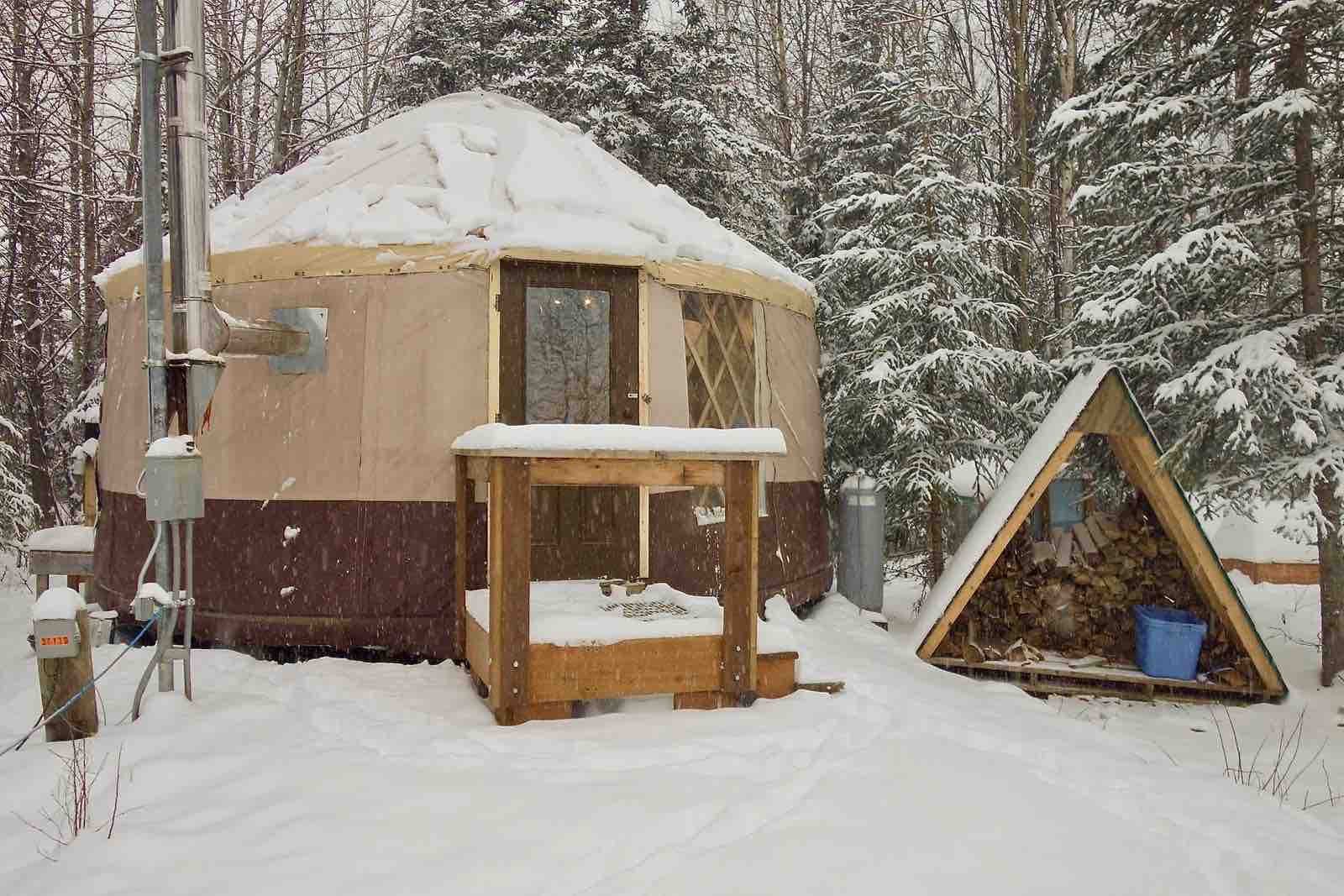
After college, my husband and I moved into a 20 foot canvas yurt in Soldotna, Alaska. For the uninitiated, a yurt is a circular canvas building based on the Mongolian style of nomadic tent.
While our modern yurt had more structure for snow load,and the textile walls had more technological advances, it still lacked some of the modern luxuries our friends and families had. Namely, plumbing and HVAC.Breena LitzenbergerIn three months, we sped through three cords of wood trying to heat a structure that leaked so much warmth the snow melted off the surrounding trees faster than our coffee thawed in the morning.
I often wondered, “what in the world are we doing living in a canvas house in the middle of winter in Alaska?” And now I know.
The Litzenberger’s canvas yurt in Soldotna, Alaska.Our time in that yurt was all so I could impart my knowledge of dealing with canvas during freezing temperatures to people who have the sense to go indoors in the winter.
Here we are, on the cusp of our second day of snow this winter season and I am filled with a glowing sense of purpose. My time has come.
Clear glass vinyl windows: Do Not TouchFirst and foremost: the most fragile facet of your canvas is clear glass vinyl. This clear vinyl is found in your enclosures, dodger windows and sailing windows on your bimini. The best thing you can do for this material is leave it alone.
When clear vinyl is cold, it does not like to move. Do not roll up any panel – it will crack. If a panel is left rolled up during cold temperatures do not attempt to roll it back down. The best thing to do is wait until temperatures rise and make the glass soft again.
If necessary, you can gently transport the panel inside where it can warm up and soften enough to be unrolled.
If the glass is tough to manipulate, it’s best to wait until the sun hits it and it warms up. Trying to strong arm it into the position you want will result in cracked glass.
Ice (and a toddler’s worth of snow load)Next is ice. A few years ago we had a winter storm where ice accumulated on booms. As the sun came out and started melting icicles along the boom, several cruisers discovered the ice had fallen, ripping holes in biminis, connectors, or canvas dodgers.
If you know there will be freezing temps, you may want to push your boom off to one side. This way, any icicles that form will not fall and damage your canvas when the ice starts to melt.
Now for the part I wish I didn’t have to mention: snow load. Despite living in the South there are times when we will need to address an accumulation of snow atop our biminis and dodgers. In the same way you might remove your bimini or dodger ahead of a hurricane, you may want to remove them ahead of winter weather.
Snow load has more to do with the frame than the fabric. If your framework is ¾” instead of 1 ¼”, your bimini cannot handle as much weight. Two inches of snow typically weighs 2.5 pounds per cubic foot. Fluffy snow weighs less, settled snow weighs more. For this, we’re going with 2.5 pcf.
This means if your bimini is 6 feet wide by 8 feet long, a winter storm which accumulates 2” of fluffy snow would weigh about 35 pounds. Imagine a small human sprawled out on top of your bimini. If you don’t have confidence in your frame or your frame has large spans between hoops, it may be a good idea to remove the fabric.
Weight increases considerably if the snow is settled (about 3-4 toddlers’ worth) or wet (now in the double digits for toddlers and triple digits for snow weight).
When it’s safe to travel to your boatUltimately it would be best to remove your canvas for these storms. But in the event you’re hibernating and waiting for the worst of it to pass, there are still actions you can take upon emerging from your den:
• Sweep off snow before it starts to melt and become wet and heavy
• Remove icicles from your boom and rigging
• Do not touch your clear vinylHappy winter sailing,
Breena Litzenberger


 Breena and her husband live in an historic home in Oriental. Together they own and operate Inner Banks Canvas. Breena and her husband live in an historic home in Oriental. Together they own and operate Inner Banks Canvas. |

