
It's Wednesday October 21, 2026
News From The Village Updated Almost Daily

Lots of boats come to Oriental, some tie up at the Town Dock for a night or two, others drop anchor in the harbor for a while. If you've spent any time on the water you know that every boat has a story. The Shipping News on TownDock.net brings you the stories of the boats that have visited recently.
July 31, 2026
Facing retirement and a Parkinson’s disease diagnosis after a career in the marine industry, Marcel Lafond knew his time to complete America’s Great Loop by boat was now.Traveling the Great Loop enticed Marcel as early as his first job in the industry, with Wisconsin-based Burger Boat Company in the late 1980s.
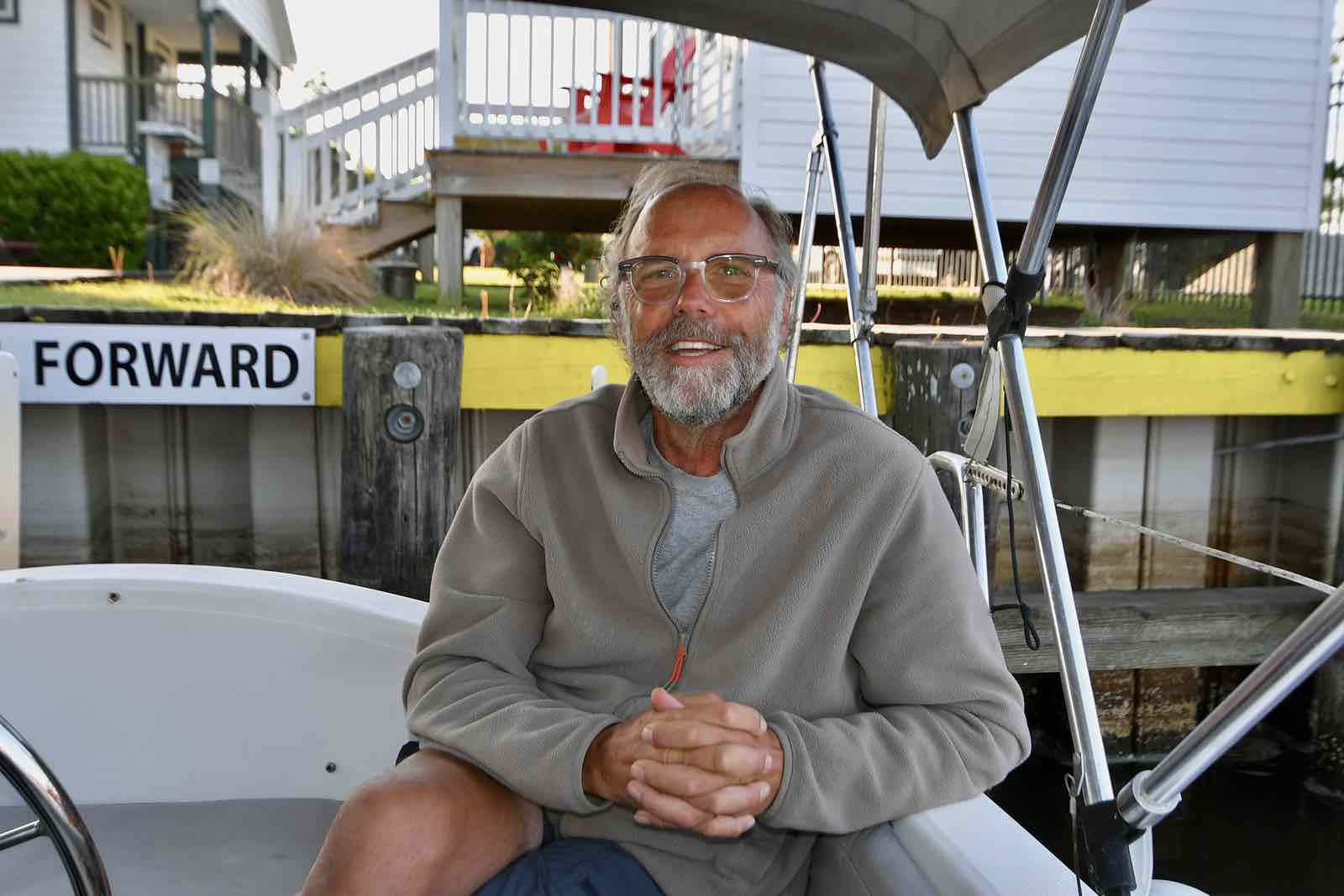
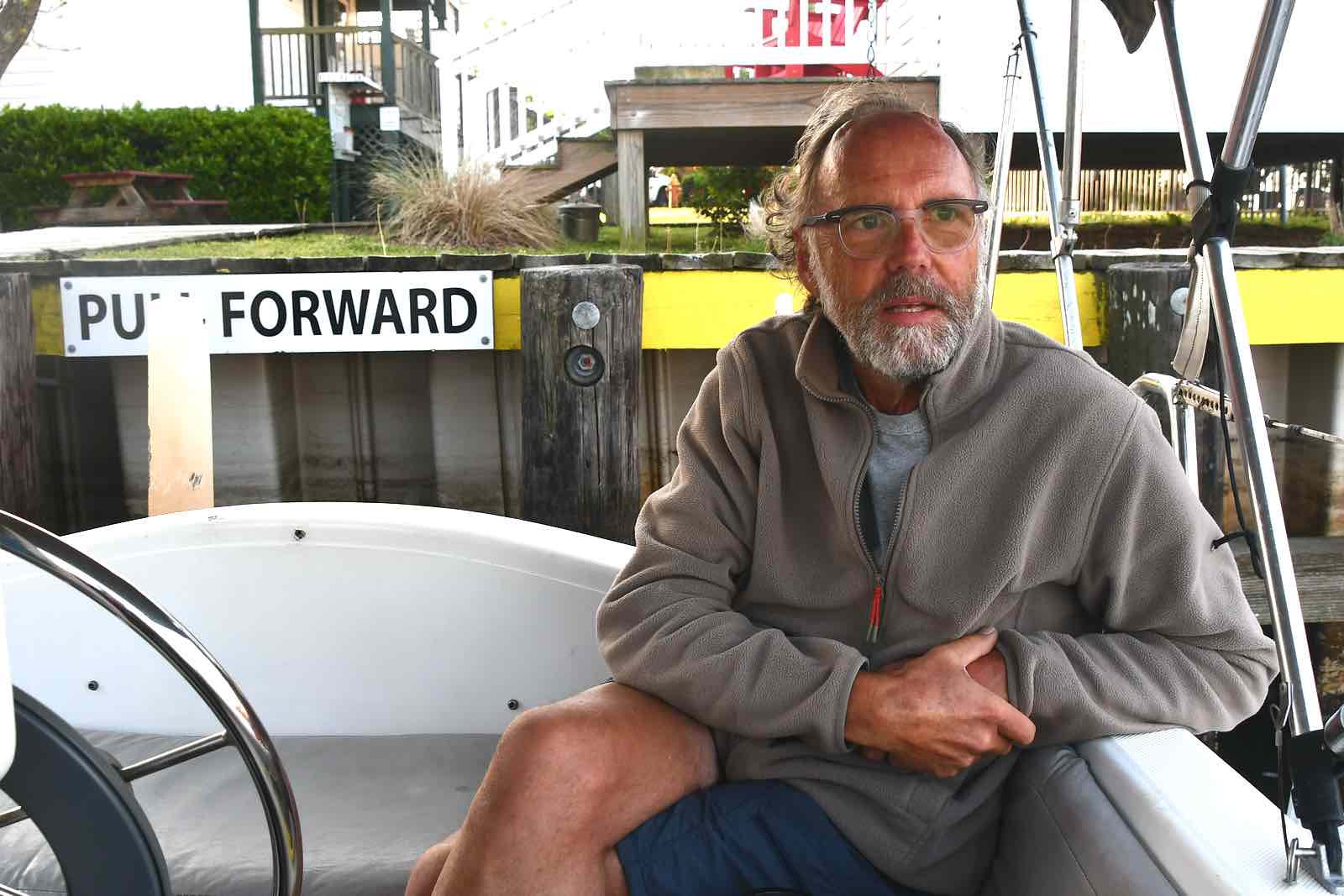
Marcel Lafond in the cockpit of SV Prospector.“That was when I first heard about it,” he says. “Of course, I was kind of hoping that Burger would put me on a boat to deliver down.”
Marcel tied up to the TownDock in mid-April 2026, aboard his MacGregor 26 motorsailer, Prospector. It was not exactly a Burger—or anything like the vessels that had influenced his long maritime career. But it was the right choice for what Marcel thought were his needs at the time.
“Of course, I didn’t know what my needs were,” he says.
Marcel has plans to do the Great Loop twice.Long before Marcel was weighing his cruising needs on the coast of North Carolina, he grew up sailing and canoeing on one of Minnesota’s 10,000 lakes, fostering an early appreciation for the water. But it was his post-graduate study of small boatbuilding and boat design at the Landing School near Kennebunkport, Maine, that truly solidified his career path.
From the 80-foot-and-over aluminum-welded motor yachts at Burger, a young Marcel cast off for the Pacific Northwest and the Washington state side of the Columbia River for a job with Tollycraft. Their focus was 35- to 65-foot motorboats, but it was the allure of the landscape and weather of the Northwest itself that drew him to the job.
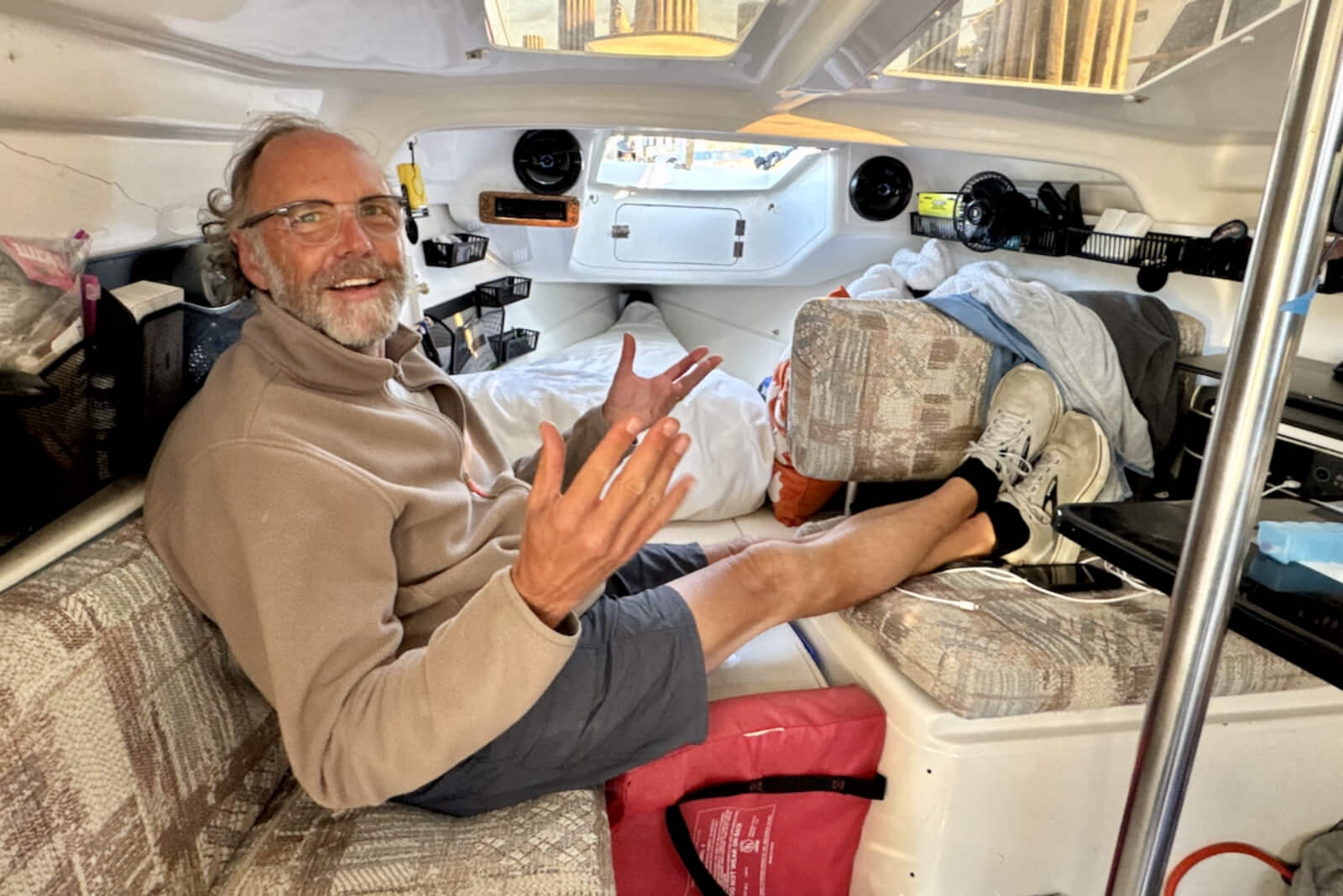
There’s not much head room for someone as tall as Marcel.“I actually wanted to design sailboats, but everybody wanted to design sailboats back then,” Marcel says. “The best I could do was going out West.”
Having fulfilled that geographic goal, Marcel now with his wife, Julie, and their daughter, moved back home to the Midwest. With Lake Superior at their doorstep in Duluth, Minnesota, the marine industry continued to beckon. His focus would remain in the powerboat sector, except for a minor detour into the aviation industry. He brought his design experience to Great Lakes powerboat manufacturer Carver Yachts, before going on to engineer the interiors of small airplanes for Cirrus Aircraft.
“One of the things that was really innovative was that they had a parachute that would lower the whole airplane to the ground if something should happen,” he says.
Marcel, when he first started his Great Loop voyage.Marcel stayed with Cirrus Aircraft for 13 years, then entered into independent consulting for a shipyard, working on 1,000-foot bulk Great Lakes freighters and with an international Florida dock builder. He also ventured back into the world of vessel manufacturing—this time on his own and on the side through the Symphony Boat Company in Duluth.
“The airplane industry had its ups and downs,” Marcel says. “Kind of like the marine industry.”
Symphony Boat Co. was a small boatbuilding company Marcel founded in 2013. He built electric-powered small craft, mostly from marine plywood. These 20-foot-long electric launch boats, as Marcel calls them, are meant for harbor tours and for use as water taxis.
Symphony Boats employed up to four people at a time, but in 2020 Marcel received the news of a Parkinson’s disease diagnosis. This diagnosis, combined with the coronavirus pandemic and what Marcel describes as business naivety, forced Symphony Boats to close permanently.
Marcel talks about his Parkinson’s diagnosis and the treatment that changed the course of his life.Marcel retired, as the prognosis for Parkinson’s was not good. Medication helped, but the threat of the disease progressing further meant it was now or never for America’s Great Loop. He hoped the level of engagement required, both mentally and physically, to prepare for and do a boat trip of this magnitude would help delay further symptoms.
“I was a little concerned that at some point I was not going to be able to move around like I can at this point,” Marcel says. “Everything was going in a direction that was not conducive to a good quality of life.”
That was until a specific Parkinson’s treatment called deep brain stimulation (DBS). The procedure implants an electronic device in the brain that helps to control motor symptoms like tremors and stiffness in patients. Marcel underwent surgery for DBS in the spring of 2025.
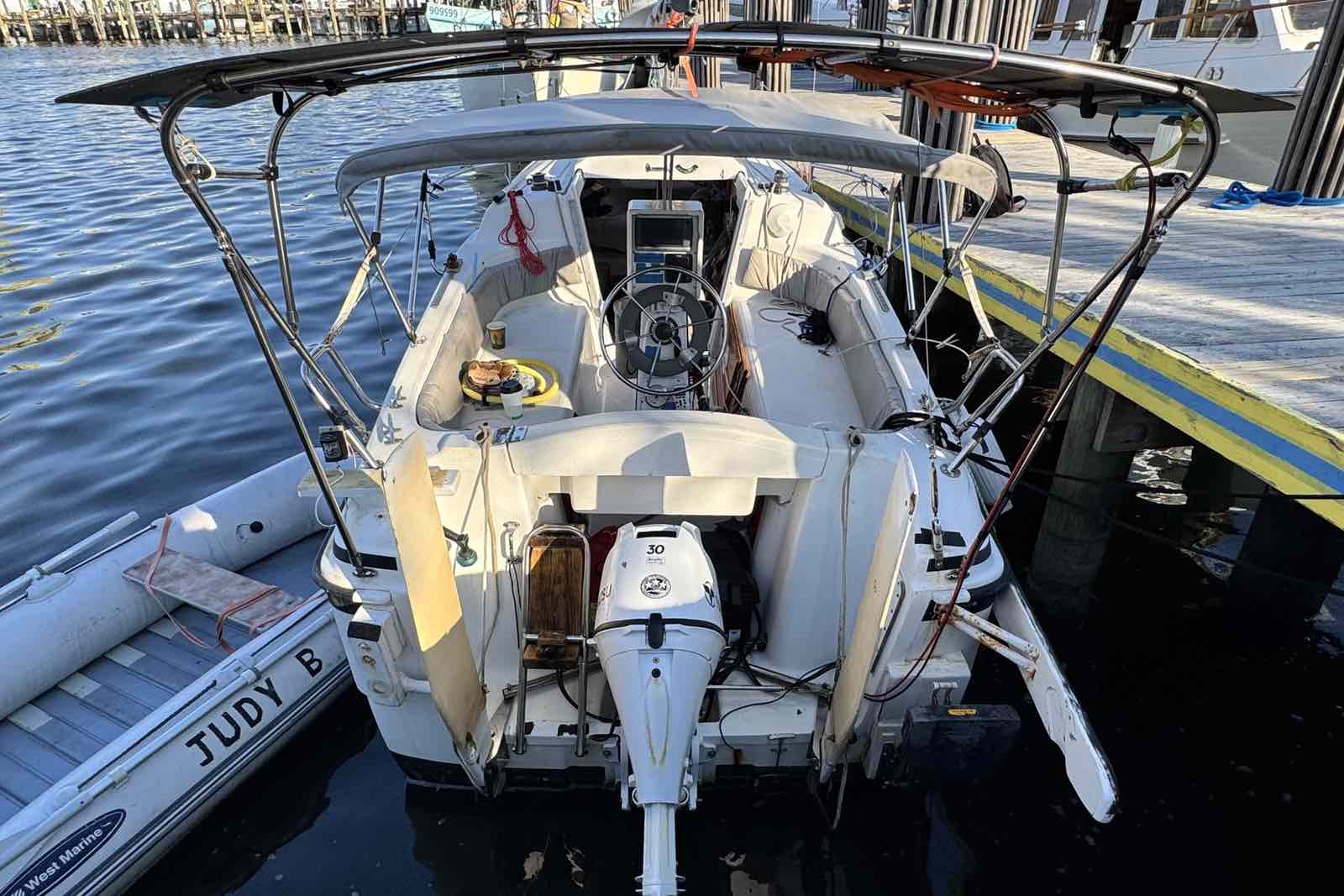
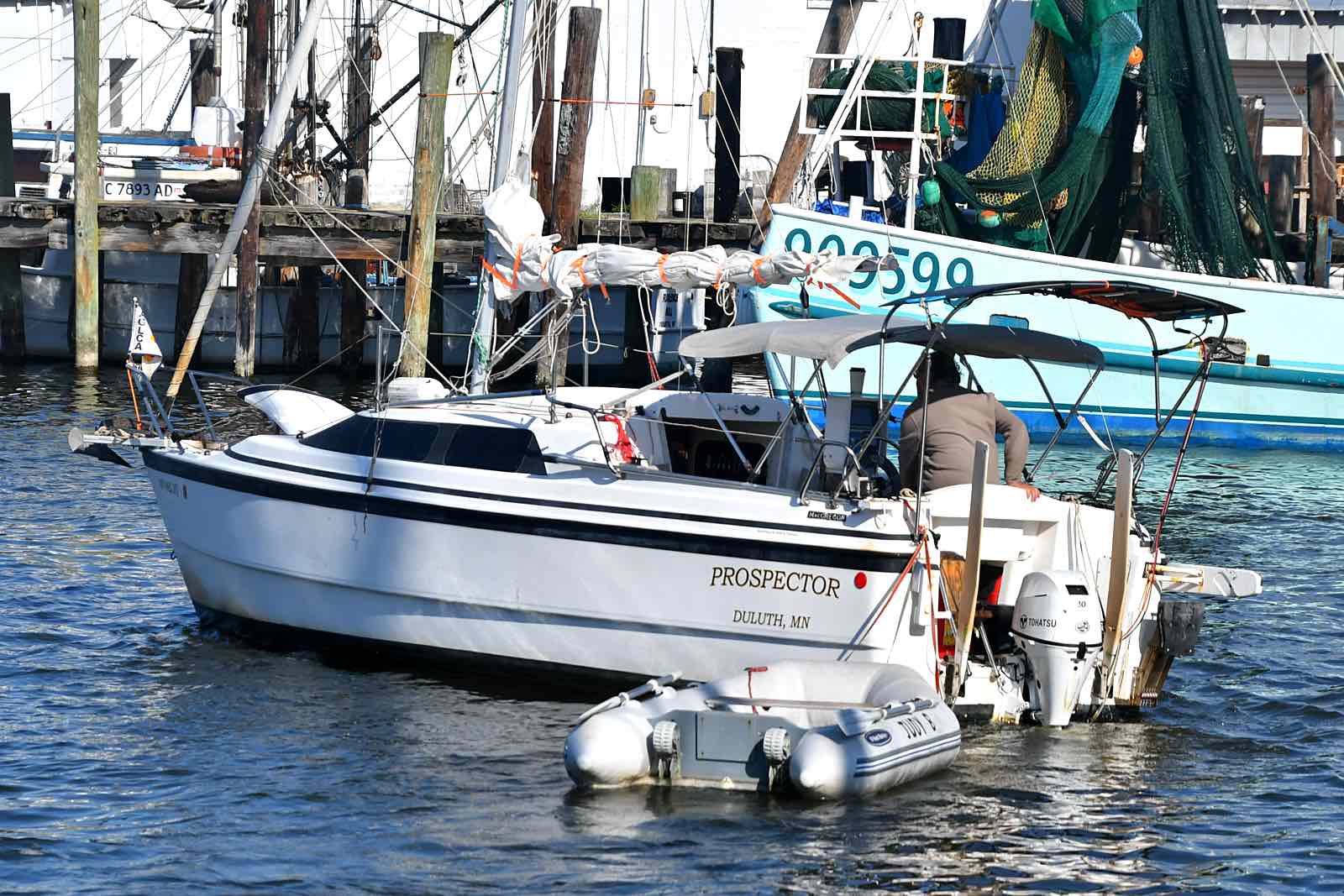
The small MacGregor with a Johnson outboard, at the second of Oriental’s free docks.Not long after recovering from brain surgery, in the fall of that same year, Marcel was ready for the Loop.
His extensive industry experience meant decades of hands-on, highly skilled labor and tactical boat handling, but long-term cruising was uncharted waters. So it was a sense of urgency and utility that informed Marcel’s boat choice of a MacGregor 26—a 26-foot, water-ballasted, trailerable motorsailer powered by a 30-horsepower Johnson outboard. He says the boat was advertised as just returning from the Bahamas, already outfitted with an autopilot and navigation electronics, and that it was cheap.
“In some ways the design is great, they’re clever,” Marcel says, seven months into his voyage aboard the boat with no standing headroom. “In some ways it’s scary, and under-built—I have to be really careful with Lake Superior and the New Jersey coast.”
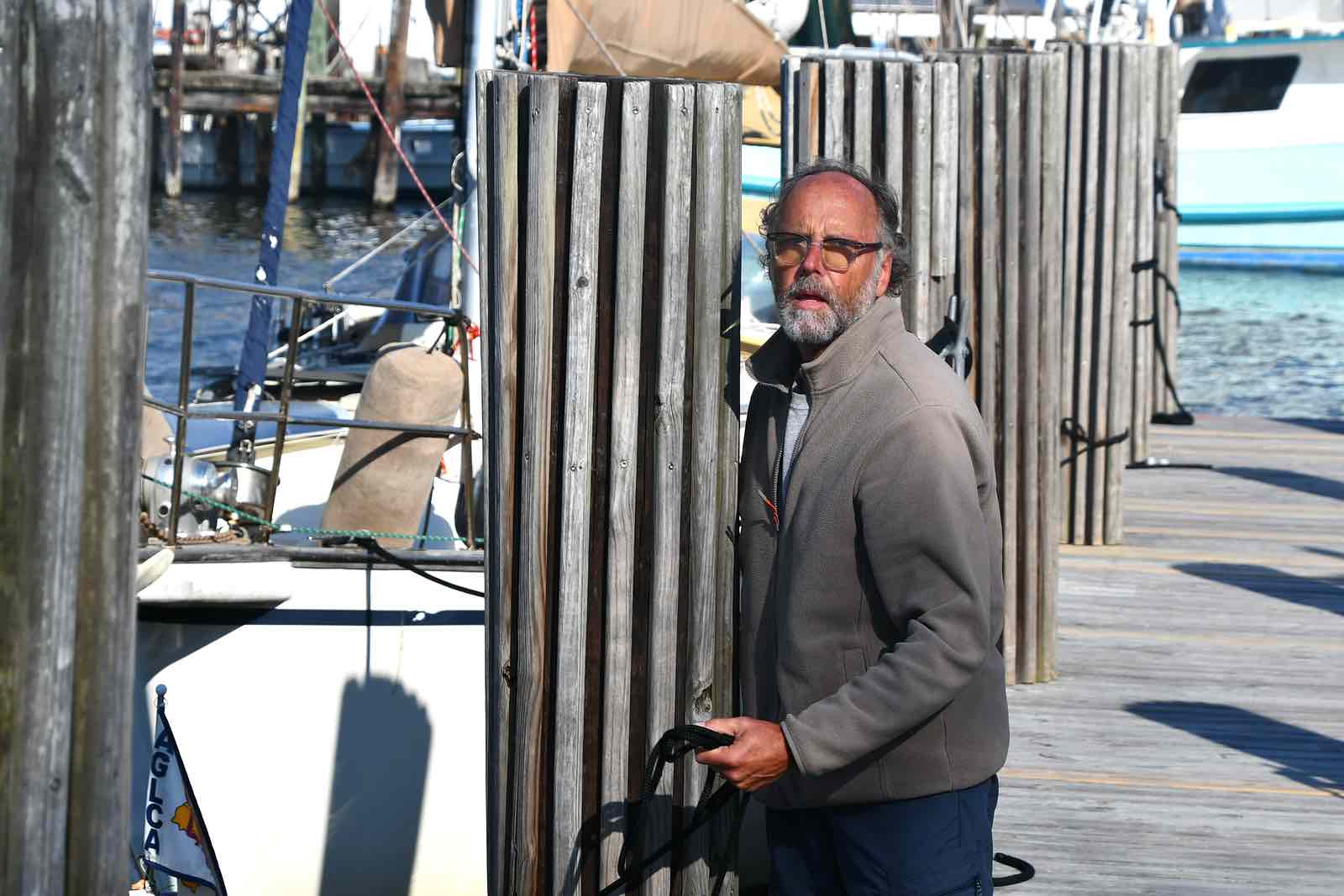
Casting off lines, readying for the next leg of his Great Loop trip.Before the procedure, the voyage was a defensive maneuver against Parkinson’s—a race against time to satisfy a lifelong curiosity with America’s Great Loop before a degenerative disease could claim his mobility. The success of his surgery completely flipped the script. Virtually symptom-free, Marcel was no longer outrunning a diagnosis. He was actively prospecting. He chose a cheap boat located close to home that could act as a prospecting vessel for future cruising and business ventures.
“My wife is not real excited about this boat and she’s definitely not excited about the head situation on it. It’s pretty compact in there.”
Marcel himself is also not thrilled about the head situation. Julie stayed behind in Minnesota, leaving her husband to voyage solo.
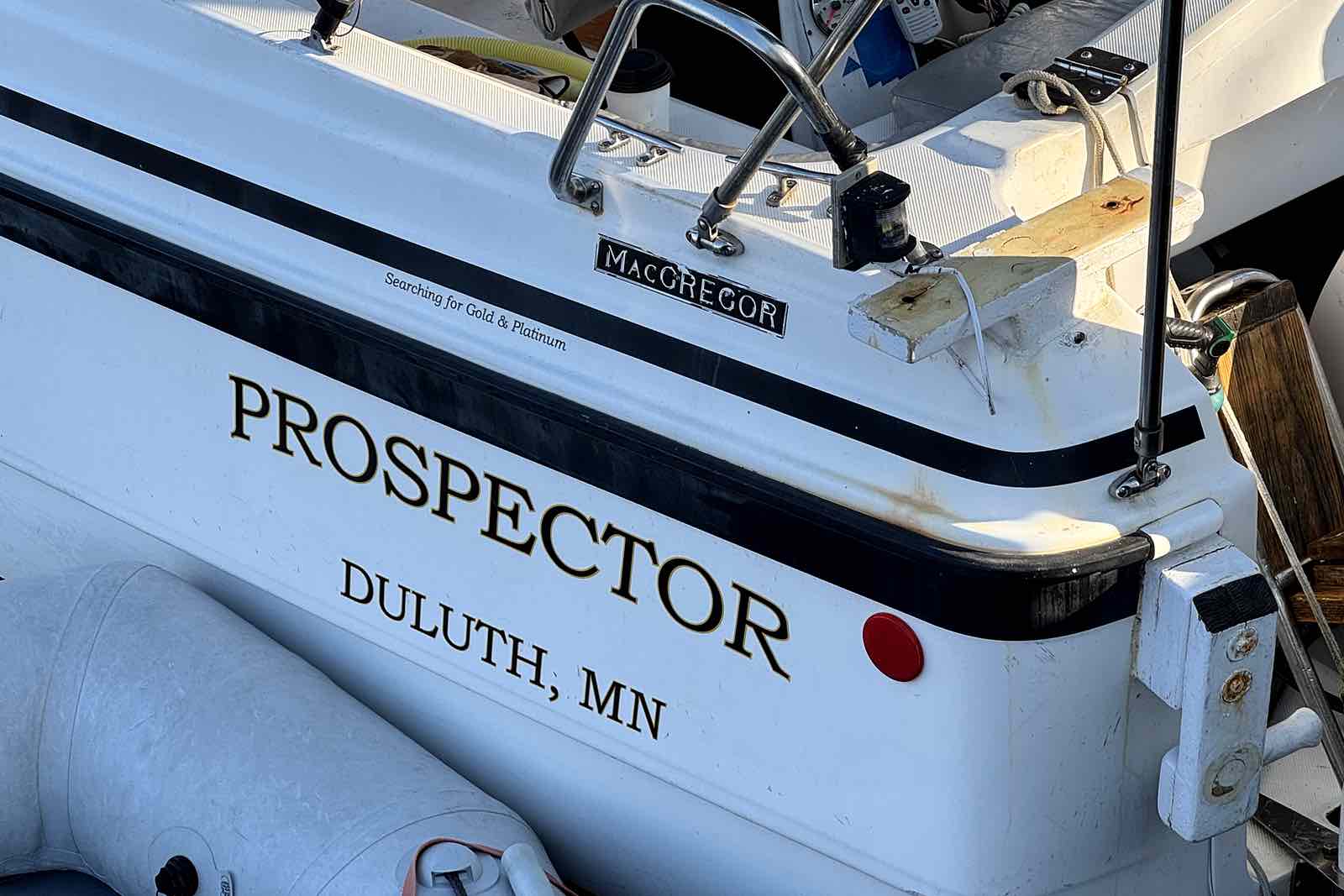
While the choice for the utilitarian MacGregor 26 may not have been informed by Marcel’s ongoing career in design, or his wife’s or his own comfort, the name he chose is a direct nod to his past and what he hopes is a shared future of cruising.Above the vessel’s name are the words ‘Searching for gold and platinum.’Prospector is named after Marcel’s grandfather, who worked as a land prospector in Minnesota’s Iron Range and was also an adventurer. The name also has a more literal meaning, as it serves not only to explore the route for the first time, but to prospect it for a potential second run on a customized boat.
Above the name decal, in smaller font, reads “searching for gold and platinum.” Gold, Marcel explains, is what it’s called when you complete the Great Loop once. Platinum is when you complete it for a second time.
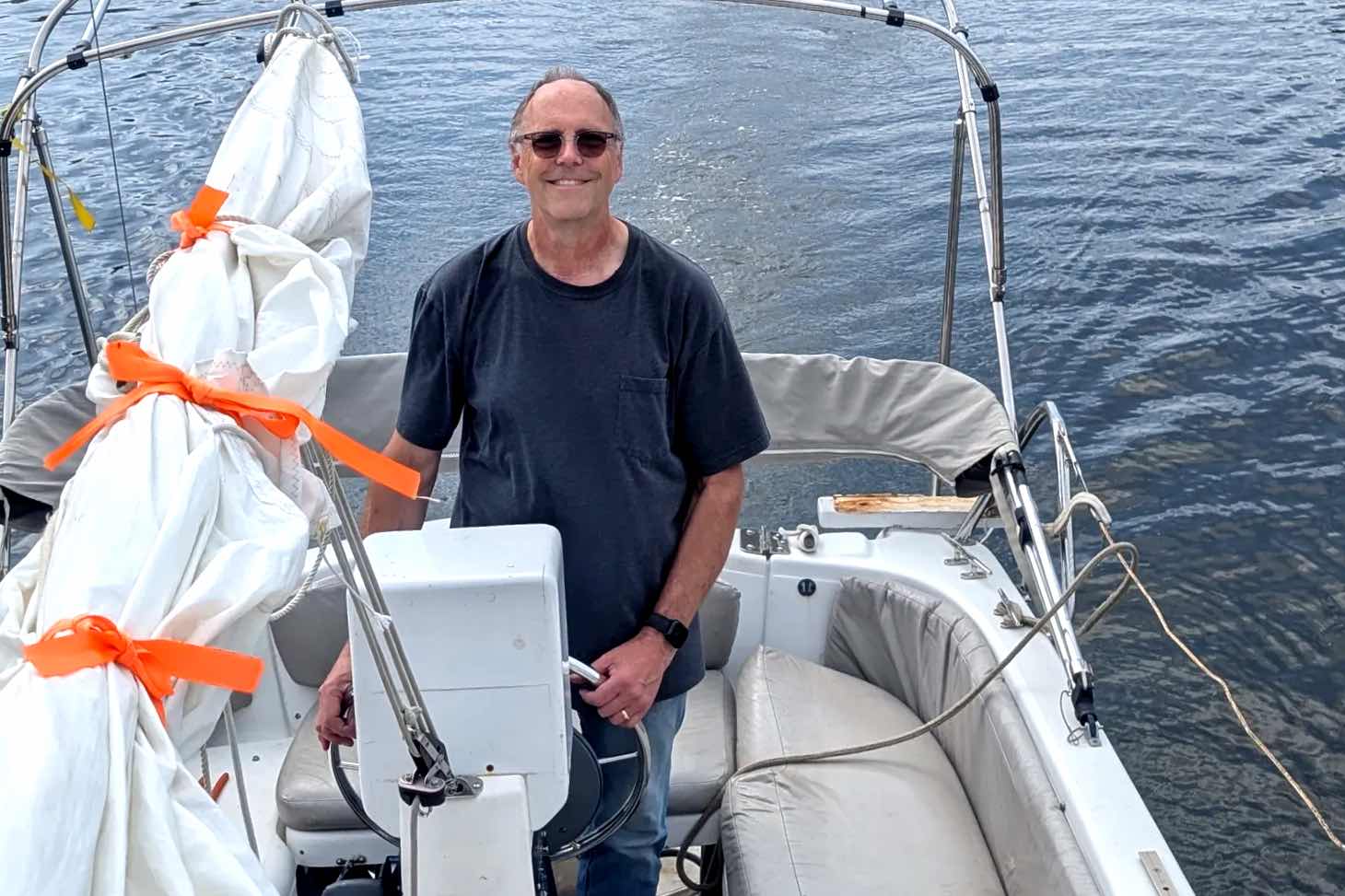
Marcel and SV Prospector.With surgery having provided such immense relief for a majority of the Parkinson’s symptoms, Marcel is imagining the potential for a second trip on the Great Loop with a boat more comfortable, stylish, powered by electric propulsion, and featuring civilized accommodations for both himself and Julie. It would be a boat that he built himself, and one he might turn into a business.
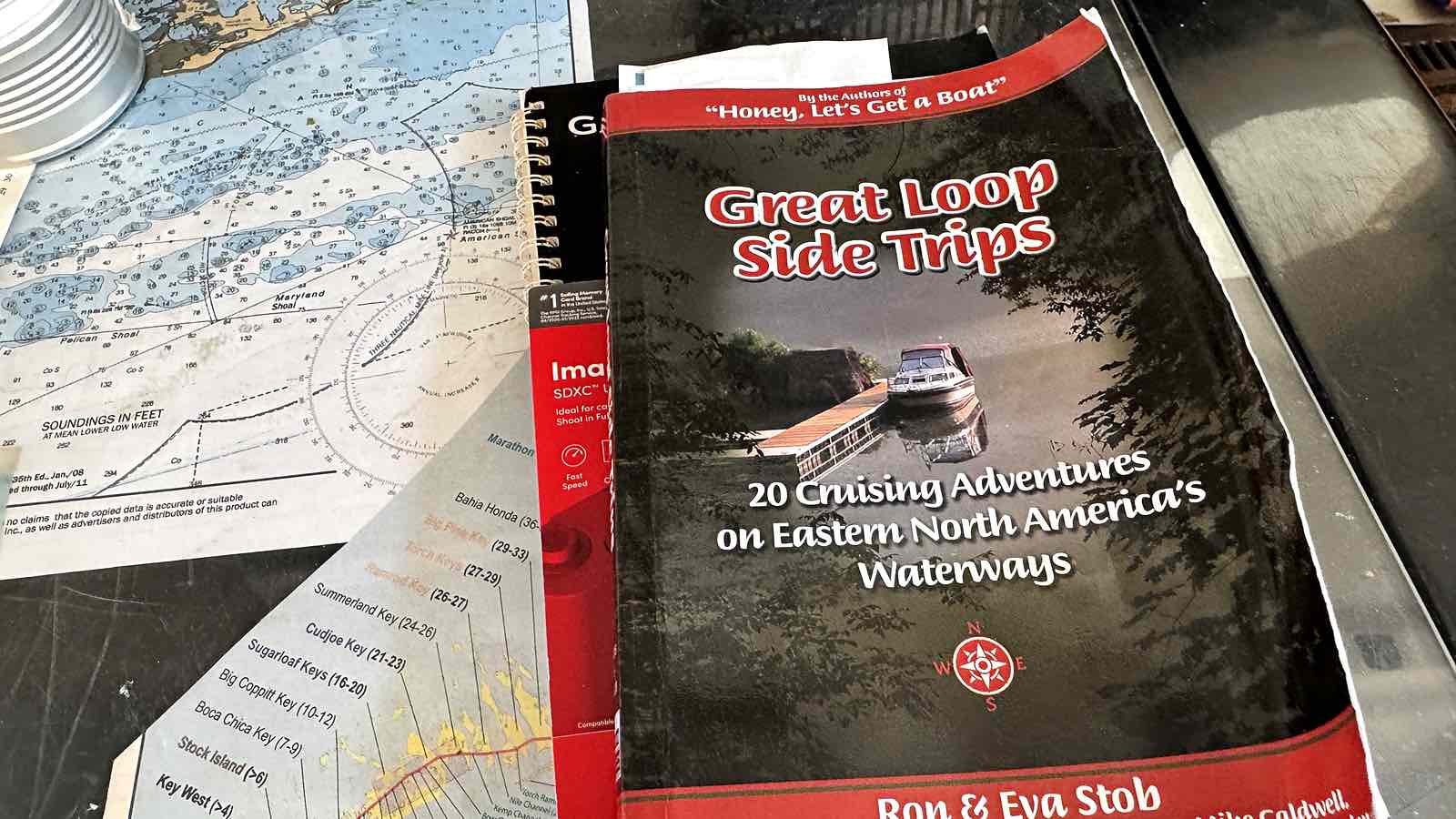
The Housecat Boat is a design Marcel engineered specifically for the Loop. He says he’s taken the opportunity to give a presentation to some of his Great Loop travel companions, gauging interest and feedback on the design.
On this run, Marcel started the trip in September of 2025 near Duluth, Minnesota. By the time he reached Oriental, it was mid-April 2026. While he says a dolphin encounter on Mobile Bay (his first interaction with dolphins in the wild), the commercial traffic, and the village of Oriental were highlights of the trip, he’s looking forward to the eastern and northern legs of the Loop. The Atlantic coast, deciduous forests, canals, and Great Lakes that lie ahead also mark the most navigationally challenging part of his trip.
Marcel Lafond.But Marcel’s not worried. He set out to see what was possible post-brain surgery, and arrived in Oriental with the prospective data for the platinum trip already stacking up.
“I could be convinced to do it again.”
Story by Emily Greenberg. Photos by Keith Smith.

Posted Friday July 31, 2026 by Keith N. Smith


 • July 2026 - Marcel Lafond and SV Prospector
• May 2026 - From Argentina to Whortonsville
• February 2026 - Mads and SV Spiffy
• July 2025 - John and the Birds
• July 2025 - Capt. Carl Cannon Jr. & Pirate Ship “Adventure”
• June 2025 - SV Mysto
• March 2025 - 1926 Motor Yacht Mariner III
• January 2025 - SV Skookum Takes On The World
• November 2024 - SV Naia
• March 2024 - Wes Barbour and SV Summer Wind
• December 2023 - Pauline and SV Elektra
• October 2023 - The Coati & The Mermaid
• June 2023 - SV White Seal
• April 2023 - SV Sarah G
• March 2023 - SV Pepita
• February 2023 - S/V Surprise
• January 2023 - SV Thunderstriker
• December 2022 - S/V Capitaine Bontems
• November 2022 - Schooner Huron Jewel
• July 2022 - Ashley, Apache, and SV Friends
• February 2022 - Sam Rouse and SV Nortena
• December 2021 - Coastal Conversations
• February 2021 - Brother Sister Dory Story
• December 2020 - Alan, David Bowie, and Blue 9
• November 2020 - Waiting for the Right Time
• September 2020 - Camping in the Creeks
• August 2020 - Solo Cruiser Emily Greenberg
• June 2020 - SV Mudfog Cove Returns
• March 2020 - SV Beyond
• February 2020 - Shahid & SV Safina
• January 2020 - Electric Vessel with Historic Roots
• May 2019 - SV Misto Circumnavigates
• April 2019 - MV Sea Glass
• July 2026 - Marcel Lafond and SV Prospector
• May 2026 - From Argentina to Whortonsville
• February 2026 - Mads and SV Spiffy
• July 2025 - John and the Birds
• July 2025 - Capt. Carl Cannon Jr. & Pirate Ship “Adventure”
• June 2025 - SV Mysto
• March 2025 - 1926 Motor Yacht Mariner III
• January 2025 - SV Skookum Takes On The World
• November 2024 - SV Naia
• March 2024 - Wes Barbour and SV Summer Wind
• December 2023 - Pauline and SV Elektra
• October 2023 - The Coati & The Mermaid
• June 2023 - SV White Seal
• April 2023 - SV Sarah G
• March 2023 - SV Pepita
• February 2023 - S/V Surprise
• January 2023 - SV Thunderstriker
• December 2022 - S/V Capitaine Bontems
• November 2022 - Schooner Huron Jewel
• July 2022 - Ashley, Apache, and SV Friends
• February 2022 - Sam Rouse and SV Nortena
• December 2021 - Coastal Conversations
• February 2021 - Brother Sister Dory Story
• December 2020 - Alan, David Bowie, and Blue 9
• November 2020 - Waiting for the Right Time
• September 2020 - Camping in the Creeks
• August 2020 - Solo Cruiser Emily Greenberg
• June 2020 - SV Mudfog Cove Returns
• March 2020 - SV Beyond
• February 2020 - Shahid & SV Safina
• January 2020 - Electric Vessel with Historic Roots
• May 2019 - SV Misto Circumnavigates
• April 2019 - MV Sea Glass