
It's Sunday September 20, 2026
News From The Village Updated Almost Daily

Lots of boats come to Oriental, some tie up at the Town Dock for a night or two, others drop anchor in the harbor for a while. If you've spent any time on the water you know that every boat has a story. The Shipping News on TownDock.net brings you the stories of the boats that have visited recently.
October 29, 2013
1 2 3 4 next page ›
Ted Parish is at the bow of his 88-year old boat, the “Nellie Crockett” when the word comes. Stewards. “We’re owners,” he says, “but we’re really stewards of history.”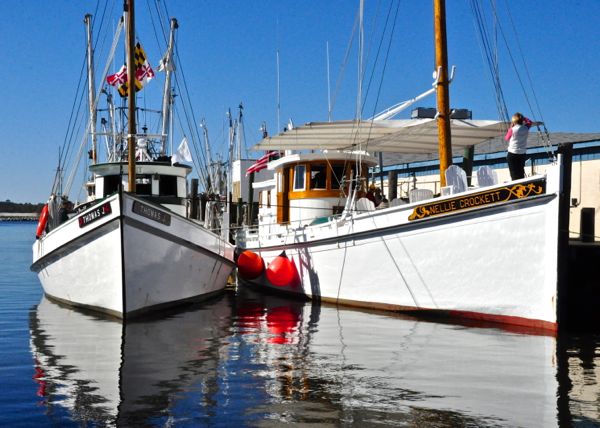 Two Chesapeake Bay Buy-Boats, the Thomas J and Nellie Crockett docked in Oriental last weekend and let many people walk the decks and take a look. And photos.
The vessel that carries that history, the “Nellie Crockett” is a 62-foot long Chesapeake Bay Buy-Boat that Ted and his wife, Mimi, brought to Oriental in late October. For two days, the Parishes welcomed aboard passersby who came by for a closer look from the docks of Garland Fulcher Seafood where the “Nellie Crockett” and another Buy-Boat, the “Thomas J” were tied up.
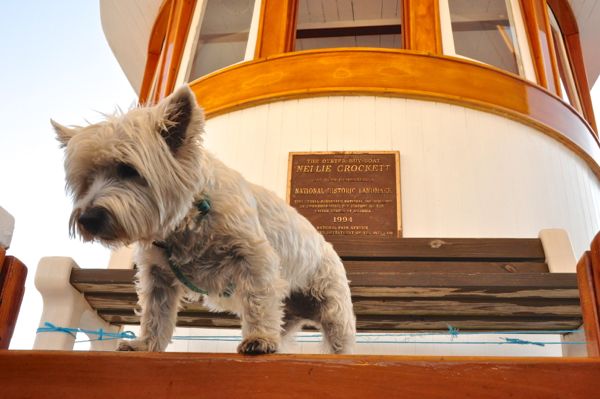 Surf surveys the hold forward of the Nellie Crockett’s pilot house. Behind him, the plaque says that in 1994, the boat was designated to be a National Historic Landmark (that floats)
For the curious, it was a rare chance to step aboard a National Historic Landmark. (A bronze plaque stating that is attached to the outside of the pilot house.)
Chesapeake Bay Buy-BoatThe “Nellie Crockett” was built in 1925-26 for man on Tangier Island, Virginia man. His name was Andrew Crockett, his daughter was Nellie.
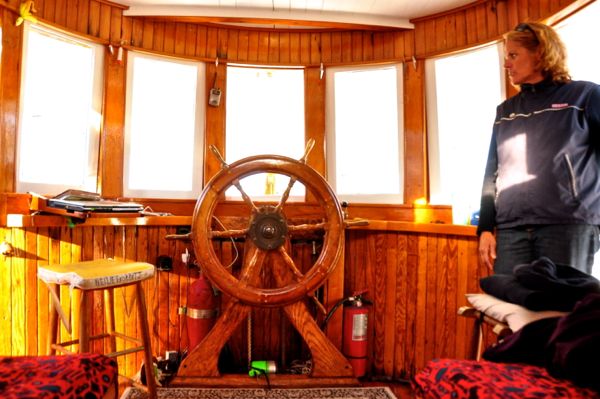 Mimi Parish in the pilot house of the Nellie Crockett, a 1925-Chesapeake Bay Buy-Boat that she and her husband have owned for 23 years.
The boat named for the girl is called a Buy-Boat because like other boats of this style, the “Nellie Crockett” would ply the oyster bed waters — primarily the Lower Chesapeake — and buy oysters harvested by watermen on the smaller skipjack sailboats. These would be stacked, several bushels high, the freeboard low to the water, and then taken to shore for sale.
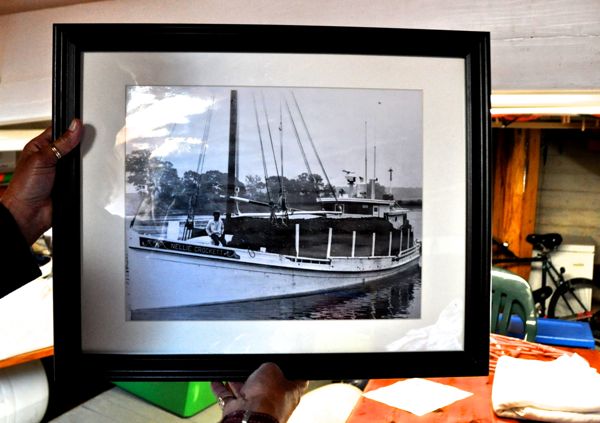 In the hold of the Nellie Crockett, Mimi Parish holds a photo of the buy-boat mid-century when bushels of oysters were stacked high on the deck.
The oysters stayed up on deck, but down in her hold, the “Nellie Crockett” also transported gravel and canned goods from canneries on the Bay or watermelons from as far away as Edenton, NC. One writer has described them as the “tractor-trailers of the Chesapeake” in their day.
For three years during WWII, the “Nellie Crockett” was pressed in to service as a fireboat for the War Shipping Administration. Her name, between 1942 and 1945 was changed to a number: CG-65015F. After the war, she went back to her original name and purpose.
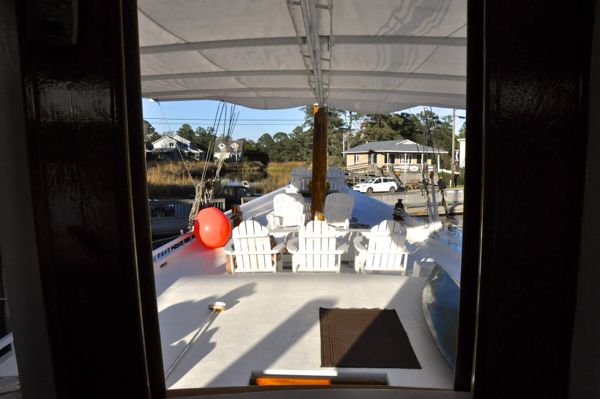 The forward deck as seen from the pilot house. This is where bushels of oysters would be stacked as the Nellie Crockett made the rounds of oyster-harvesting skipjacks and then brought the haul to shore.
The buy-boats were the way for goods to get from one part of the Bay to another, but Ted Parish says around the mid-1950’s “that industry started dying out. The Bay Bridge was built in ’56,” he notes “And that was the start of refrigerated trucking. The roads became passable.” The boats were not as important as they once were.
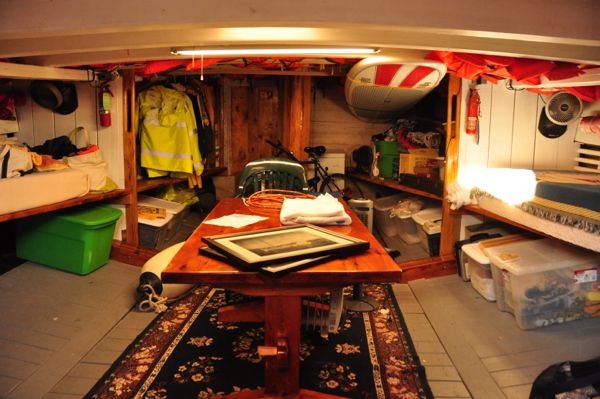 The hold of the Nellie Crockett no longer carries watermelons. It’s the main living and sleeping quarters on board.
Still, the “Nellie Crockett” kept at the buy-boat cargo trade under several owners, until the mid-1980’s.
1 2 3 4 next page ›
Posted Tuesday October 29, 2013 by Melinda Penkava


 • July 2026 - Marcel Lafond and SV Prospector
• May 2026 - From Argentina to Whortonsville
• February 2026 - Mads and SV Spiffy
• July 2025 - John and the Birds
• July 2025 - Capt. Carl Cannon Jr. & Pirate Ship “Adventure”
• June 2025 - SV Mysto
• March 2025 - 1926 Motor Yacht Mariner III
• January 2025 - SV Skookum Takes On The World
• November 2024 - SV Naia
• March 2024 - Wes Barbour and SV Summer Wind
• December 2023 - Pauline and SV Elektra
• October 2023 - The Coati & The Mermaid
• June 2023 - SV White Seal
• April 2023 - SV Sarah G
• March 2023 - SV Pepita
• February 2023 - S/V Surprise
• January 2023 - SV Thunderstriker
• December 2022 - S/V Capitaine Bontems
• November 2022 - Schooner Huron Jewel
• July 2022 - Ashley, Apache, and SV Friends
• February 2022 - Sam Rouse and SV Nortena
• December 2021 - Coastal Conversations
• February 2021 - Brother Sister Dory Story
• December 2020 - Alan, David Bowie, and Blue 9
• November 2020 - Waiting for the Right Time
• September 2020 - Camping in the Creeks
• August 2020 - Solo Cruiser Emily Greenberg
• June 2020 - SV Mudfog Cove Returns
• March 2020 - SV Beyond
• February 2020 - Shahid & SV Safina
• January 2020 - Electric Vessel with Historic Roots
• May 2019 - SV Misto Circumnavigates
• April 2019 - MV Sea Glass
• July 2026 - Marcel Lafond and SV Prospector
• May 2026 - From Argentina to Whortonsville
• February 2026 - Mads and SV Spiffy
• July 2025 - John and the Birds
• July 2025 - Capt. Carl Cannon Jr. & Pirate Ship “Adventure”
• June 2025 - SV Mysto
• March 2025 - 1926 Motor Yacht Mariner III
• January 2025 - SV Skookum Takes On The World
• November 2024 - SV Naia
• March 2024 - Wes Barbour and SV Summer Wind
• December 2023 - Pauline and SV Elektra
• October 2023 - The Coati & The Mermaid
• June 2023 - SV White Seal
• April 2023 - SV Sarah G
• March 2023 - SV Pepita
• February 2023 - S/V Surprise
• January 2023 - SV Thunderstriker
• December 2022 - S/V Capitaine Bontems
• November 2022 - Schooner Huron Jewel
• July 2022 - Ashley, Apache, and SV Friends
• February 2022 - Sam Rouse and SV Nortena
• December 2021 - Coastal Conversations
• February 2021 - Brother Sister Dory Story
• December 2020 - Alan, David Bowie, and Blue 9
• November 2020 - Waiting for the Right Time
• September 2020 - Camping in the Creeks
• August 2020 - Solo Cruiser Emily Greenberg
• June 2020 - SV Mudfog Cove Returns
• March 2020 - SV Beyond
• February 2020 - Shahid & SV Safina
• January 2020 - Electric Vessel with Historic Roots
• May 2019 - SV Misto Circumnavigates
• April 2019 - MV Sea Glass